The processing methods for Chinese herbal slices have continuously evolved throughout history. Below, Anhui Shunhetang Chinese Herbal Slices Co., Ltd. provides a detailed introduction to these methods.
Processing Methods During the Warring States Period:
Written records of Chinese herbal processing date back to the Warring States period. Huangdi Neijing (The Yellow Emperor's Inner Canon), the earliest extant medical classic in China, includes a reference to "prepared Banxia (Pinellia)" in the Shumi Banxia Decoction used to treat insomnia. This indicates that routinely processed medicinal substances were already being employed for disease prevention and treatment at that time.
Processing Methods During the Han Dynasty:
According to historical records, a wide variety of processing methods were already in use during the Han Dynasty, including steaming, stir-frying, roasting, calcining, baking, refining, boiling, fire-roasting, burning, cutting, grinding, filing, pounding into paste, washing with wine, decocting with wine, boiling with wine, soaking in water, washing with hot water, scraping off bark, removing cores, removing wings and feet, and removing hairs. Meanwhile, the theoretical framework for processing began to take shape. Shennong Bencao Jing (Shennong's Classic of Materia Medica), China's first pharmaceutical book, states in its introductory section: "Medicines... whether toxic or non-toxic, should be dried in shade or in the sun; the timing of harvesting and preparation, whether used raw or processed, the region of origin, authenticity, and whether fresh or aged—all have their respective methods... If a toxic substance requires processing, mutual restraint or mutual neutralization may be applied; otherwise, they should not be combined."
Processing Methods During the Liu Song Period of the Southern Dynasties:
During the Liu Song period of the Southern Dynasties, China's first specialized monograph on processing, Leigong Paozhi Lun (Master Lei's Discourse on Processing), was published. The processing methods recorded in this work mainly included steaming, boiling, stir-frying, baking, roasting, baking in fire, calcining, soaking, and levigation. This book exerted a profound influence on the subsequent development of Chinese herbal processing, and certain methods described therein remain highly valuable even today.
Processing Methods During the Ming Dynasty:
During the Ming Dynasty, Chinese herbal processing developed more comprehensively. In terms of theory, Chen Jiamo systematically discussed the mechanisms of various processing adjuvants in his work Bencao Mengquan. He recorded: "Processing with wine raises and lifts; processing with ginger promotes dispersion; processing with salt directs action to the kidney and helps soften hardness; processing with vinegar guides action to the liver and aids in pain relief; processing with boy's urine removes undesirable properties and directs downward; processing with rice-washing water removes dryness and harmonizes the middle; processing with milk moistens, restores depletion, and promotes the generation of yin and blood; processing with honey, being sweet and slow to dissolve, tonifies primordial yin; processing with aged wall soil captures true qi and rapidly tonifies the middle burner; processing with wheat bran restrains harsh properties to avoid damaging the upper thorax; soaking and sun-drying with black bean decoction or licorice root decoction detoxifies and renders the substance mild and balanced..." He also emphasized: "In the preparation of all medicines, proper moderation is essential. If under-processed, the desired efficacy is difficult to achieve; if over-processed, the aroma and properties may be lost." The renowned medical scholar Li Shizhen synthesized the contributions of many predecessors and dedicated a section titled "Xiuzhi" (Preparation and Processing) in his monumental work Bencao Gangmu (Compendium of Materia Medica), compiling the methods of various schools.

Some processing methods were also discussed in light of Traditional Chinese Medicine theory. Subsequently, Miao Xiyong expanded upon Leigong Paozhi Lun by adding commonly used processing methods of his time, and in his work Paozhi Dafa (The Great Methods of Processing), he proposed the renowned "Seventeen Processing Methods."
Processing Methods for Modern Chinese Herbal Slices:
Since the founding of the People's Republic of China, the Chinese herbal processing industry has developed rapidly, thanks to the strong support and attention from the Party and the government. Relevant departments across the country have systematically documented the time-honored processing experiences scattered throughout their respective regions. On this basis, processing standards have been formulated and published in most parts of the country. Meanwhile, the national pharmacopoeia has incorporated content on Chinese herbal processing, and a series of specialized monographs on processing have been published, such as Zhongyao Paozhi Jingyan Jicheng (Compendium of Experience in Chinese Herbal Processing) published by People's Medical Publishing House, and Zhongyao Paozhixue (Science of Chinese Herbal Processing) published by Jiangsu People's Publishing House.
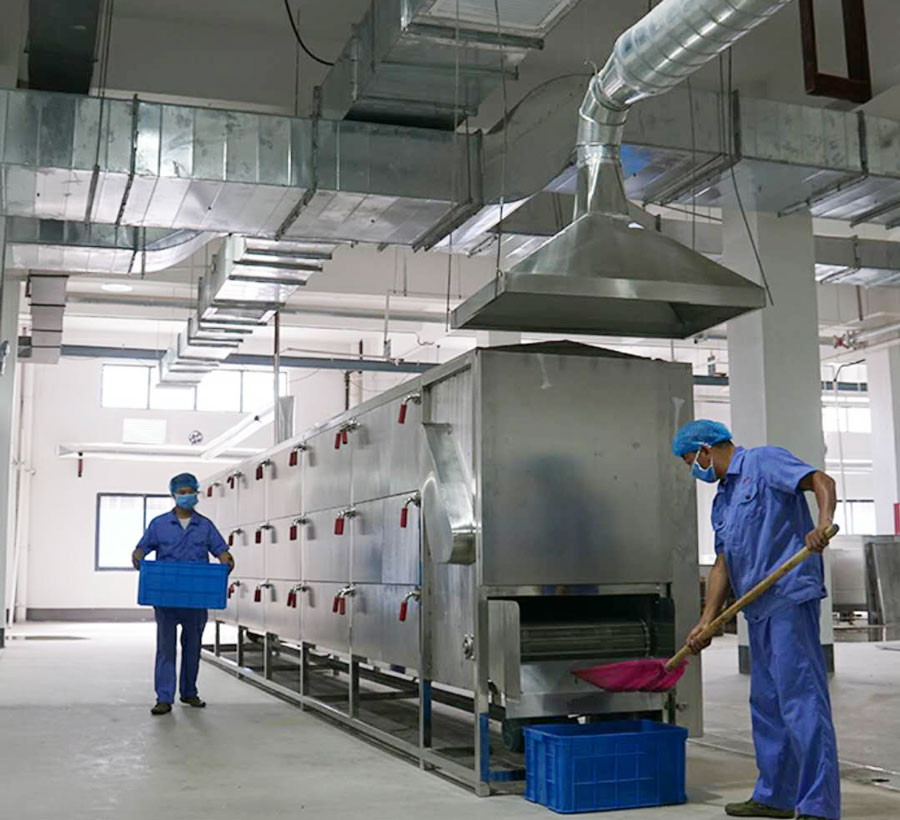
In terms of scientific research, many TCM research institutions across the country have been conducting studies on Chinese herbal processing, and a dedicated research workforce has been established. In terms of production, the scale of Chinese herbal processing has been continuously expanding, and the quality of herbal slices has gradually improved. With technological advancements in China, processing equipment has become increasingly mechanized, including rotary washing machines, peeling machines, planing machines, slicing machines, and various types of electric stir-frying pans. These developments are moving toward automation and integrated production lines.
The above is Anhui Boyao Qiancao National Medicines Co., Ltd.'s detailed explanation of the processing methods for Chinese herbal slices. If you are looking for Anhui Boyao Qiancao National Medicines Co., Ltd., please feel free to contact us!
 English


